
Stories from the Field
Life, Beauty and Legacy
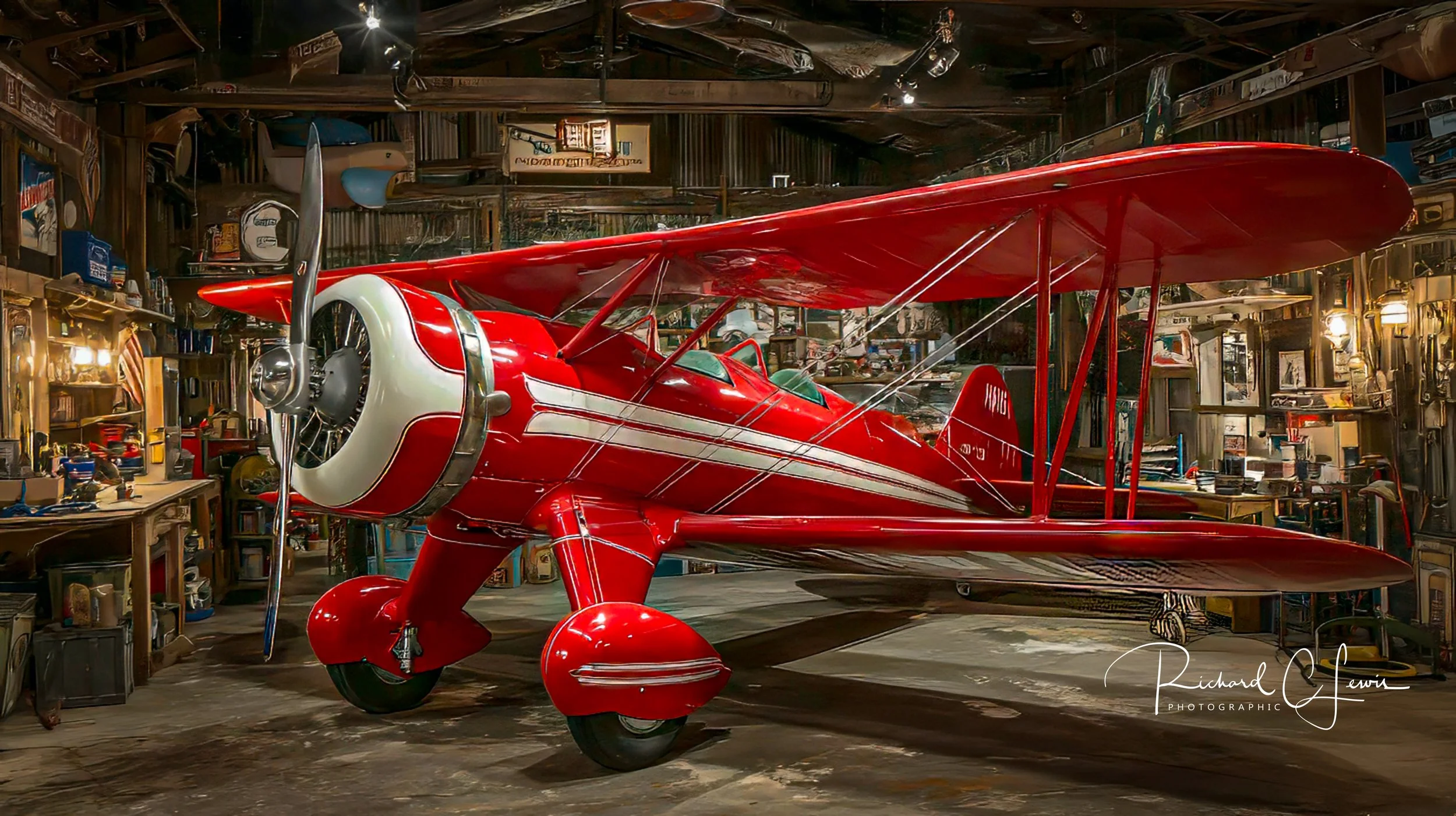
I have spent much of my life learning that beauty rarely announces itself. Sometimes it arrives through a camera lens, waiting in the slant of afternoon light or the unguarded expression of someone I love. Sometimes it hides in a piece of walnut beneath the sawdust, in the blue flame of a welder, in molten metal, turning wood, or a small plastic creation slowly appearing one deliberate layer at a time. Perhaps software is not so different. It, too, begins as an idea no one else can see, shaped by patience, failure, imagination, and the occasional vocabulary of a sailor when the damned thing refuses to work. I do not always speak gently about the world, but I have tried to look at it honestly—and honesty, when given enough light, can be its own kind of beauty.
Of all the things I have built, repaired, photographed, programmed, welded, turned, or imagined, none matters more than the example I leave for my daughter. I cannot prepare the road ahead of her, remove every storm, or silence every fool she will meet along the way. What I can do is teach her to trust her own wings, to question easy answers, to laugh when the world becomes absurd, and to remain kind without becoming fragile. A father’s greatest work is not to build a life his child must follow, but to help her discover the courage to build one of her own. And perhaps, when she steps into the future and finds beauty where others see only trouble, I will know that the best parts of me traveled farther than I ever could.
When the Beer was Brewing
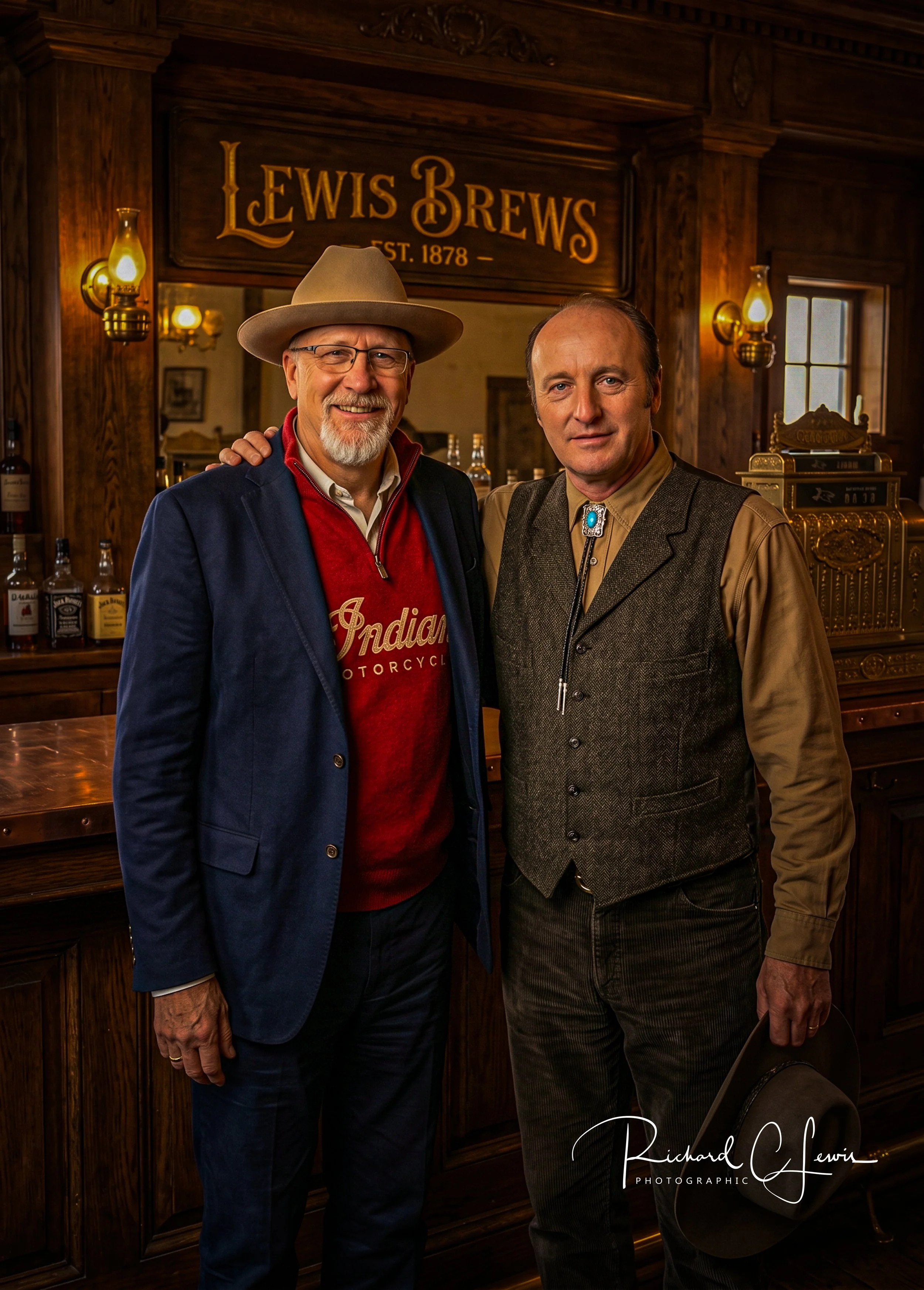
Standing beside me…
Sometimes I imagine my father standing beside me still, not gone, only flying in a sky I have not learned to see. I would tell him that the boy he left in December, when the world was changing shape beneath my feet, kept going. I would tell him I learned to fix things, not only engines and boards and broken corners of the house, but harder things too: a life, a purpose, a family, a heart that had to keep beating without his voice nearby. I would tell him about the work I have done, the people I have helped, the small dents I have made in the universe by refusing to drift. I would tell him about my daughter, and how love becomes its own kind of craftsmanship when you raise a child with patience, courage, and wonder. And maybe he would smile the way he did when the beer was brewing and the tools were out, and say that nothing worth building is ever finished, only handed forward. Then I would understand that I had been speaking to him all along—in every repaired thing, every brave choice, every laugh at the table, every dream I refused to set down.
The Fire in the Timber
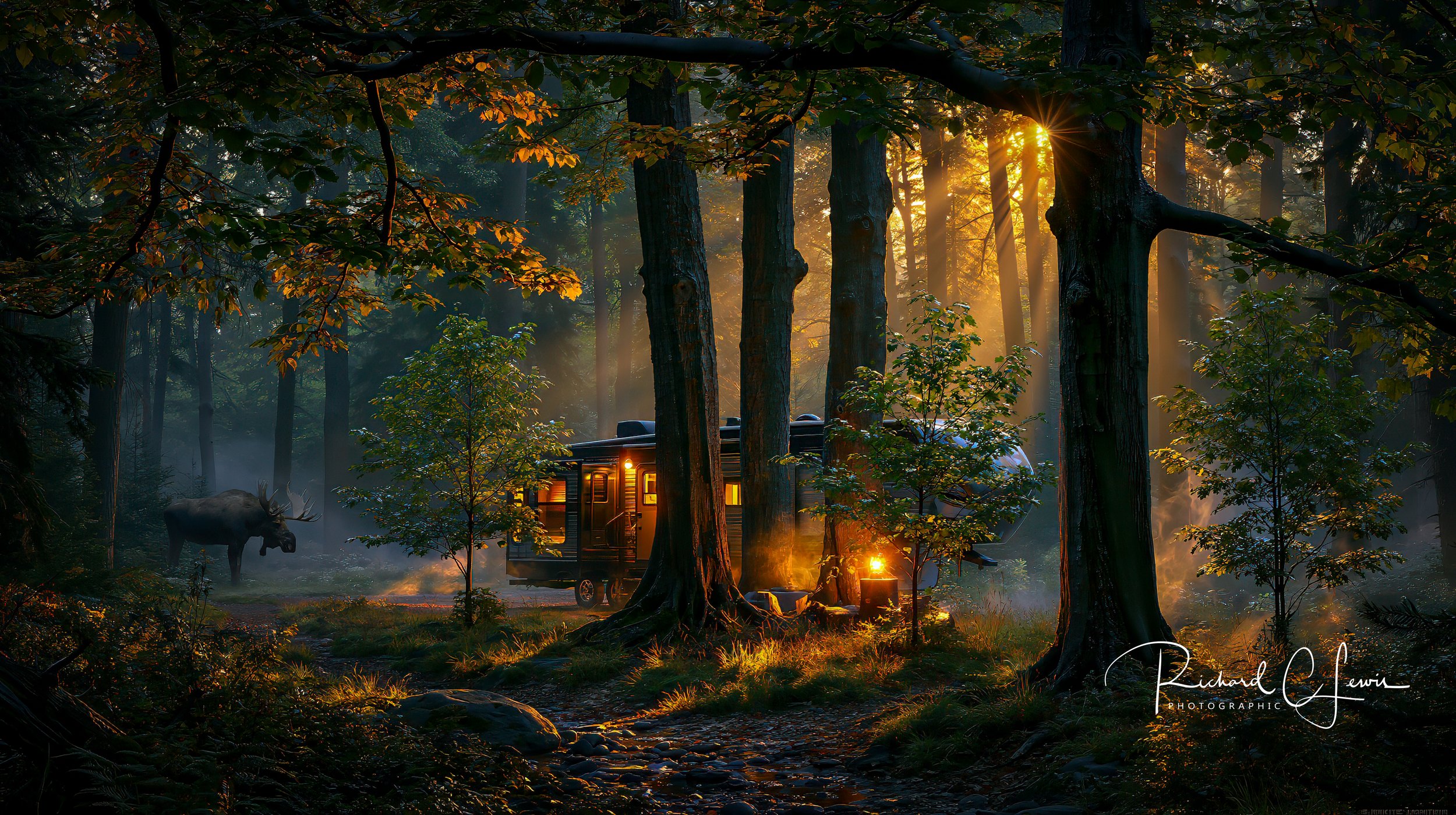
The road ended where the trees began to keep their own counsel.
We had come up from Bozeman in the late afternoon with the camper pulling hard behind the truck and the mountains blue and far off, like old men who had seen enough of weather to stop speaking of it. There were three of us. Tom drove. I sat beside him with the map folded wrong in my lap. Behind us, Clay slept with his hat over his face and his boots crossed like he owned the whole state of Montana and half of Wyoming besides.
We were not young, though we still lied about it in the way men lie when they climb into trucks before dawn. We said our knees were fine. We said the coffee was strong enough. We said the road was easy.
The road was not easy.
It climbed through lodgepole and fir and then dropped into a dark piece of forest where the sun came low through the timber and made gold of everything it touched. The leaves burned orange above us. The creek ran thin and cold over stone. Mist hung in the low places. It was the kind of evening that made a man quiet, even if he had spent most of his life avoiding quiet.
“This will do,” Tom said.
And it did.
We leveled the camper between three big trees and set the chocks under the wheels. Clay gathered wood. I made coffee on the camp stove and watched the light move through the forest like something alive. We had brought too much food, not enough whiskey, and just enough pride to be dangerous.
A moose came out of the timber before dark.
He was a bull, heavy and black-shouldered, with antlers wide as a gate. He stood in the mist near the creek and looked at us as if we were late to an appointment he had been keeping for a thousand years. No one reached for a camera at first. No one spoke.
That was good.
There are things a man ruins by trying to own them too quickly.
The moose lowered his head and tore at the willow. He was not afraid of us. He was not impressed by us either. He had winter ahead of him and a forest behind him and all the dignity a creature can carry without knowing the word for it.
Clay finally whispered, “Big son of a gun.”
The moose lifted his head.
“Respectfully,” Clay added.
Tom laughed under his breath.
We watched until the bull walked back into the dark trees and vanished so completely it seemed he had never been there at all.
That night the fire burned clean and orange. The camper windows glowed behind us. The forest closed in, not cruelly, but firmly. There is a difference. The stars came late because the trees held the sky in pieces.
We ate trout Clay had caught that morning and potatoes fried in a pan blackened by old fires. Tom told the story of the time he got lost above the Madison and followed elk tracks the wrong way for five miles. Clay said that was not being lost. That was being confidently incorrect with scenery.
We laughed hard at that. Harder than the joke deserved. Men do that when they are tired and grateful and no longer trying to prove anything.
Later, after the plates were cleaned and the fire settled low, Tom spoke of his brother who had died the winter before. He did not make a speech of it. He only said his brother would have liked the place.
No one answered right away.
The creek spoke for us.
Then Clay put another log on the fire, and I poured the last of the whiskey into three cups. It was not enough for three cups, but it was enough for three men.
“To him,” I said.
“To him,” they said.
The forest took the words and kept them.
In the morning, the cold was honest. It came through the camper walls and found every old injury we had brought with us. My back ached. Tom’s hands were stiff. Clay cursed one boot, then the other, then the entire invention of laces.
But the sun came through the trees again, and the whole place was made new.
We packed small bags and hiked west, toward a ridge Tom had marked on the map. The trail was not much of a trail. It was an argument between stones, roots, and gravity. We followed it anyway. A man should do that sometimes. Follow a hard thing simply because it is there and because something in him grows smaller when he does not.
By noon we had climbed high enough to see the country open below us. Montana stretched out in folds of timber and meadow, river and rock, light and distance. Far away, the mountains stood blue and indifferent.
Clay sat on a fallen log and took off his hat.
“Well,” he said, “that’s worth the price of admission.”
“There was admission?” Tom asked.
“Your knees paid it.”
We ate sandwiches in the wind. They were smashed flat and tasted better than anything made by a chef with clean fingernails. A raven crossed above us. Somewhere below, in the timber, a branch broke with the heavy sound of an animal moving unseen.
That was the bargain out there. You saw some things. You did not see others. The unseen things were part of the price, and maybe part of the mercy.
On the way down, the weather changed.
Clouds came over the ridge fast and hard. The light went out of the forest. Rain began as a whisper and then became serious. The trail slicked under our boots. We had prepared, but not perfectly. No one ever does. We had good coats and bad timing. We had a map and too much confidence. We had friends, which was better.
Tom slipped once and caught himself against a spruce. Clay took his pack without asking. Tom said he was fine. Clay said nothing and kept the pack.
That is how men love each other when they have not been trained in poetry.
The rain turned cold. The creek we had crossed in the morning had swollen by the time we reached it again. It was not deep enough to kill us, but it was deep enough to make fools of us, and the water in Montana is always pleased to do that.
We stood at the bank and studied it.
“Could wait,” I said.
“Could,” Tom said.
“Won’t get warmer.”
“No.”
Clay looked upstream, then down. “We cross slow. One at a time. No hero work.”
That was the best thing said all day.
We crossed slow. Boots sliding. Poles searching. Water pressing hard at the shins. Halfway across, I felt the current take me. Not much. Just enough. Enough to know how little separates a man from being carried away.
Then Tom’s hand was on my shoulder.
Clay’s hand was on Tom’s pack.
Three old fools in a creek, holding one another against the pull of the world.
We made the far bank wet and shaking and alive. The camper was not far then. The firewood was under the tarp. The coffee was waiting to be made. These were small things, and small things are not small when you have earned them.
That evening, the moose came back.
He stood closer this time, at the edge of the firelight. Steam rose from his body. Rain shone on his coat. Behind him the forest was black and deep and full of the old laws.
He looked at us, and we looked at him.
I thought then of the fisherman alone on the sea, with his hands cut and his back bent and the great fish pulling him farther from shore. I thought of how a man may lose the thing he fought for and still come home with something no teeth can strip from him.
The moose had no need to teach us. The forest had no need to explain itself. But a man who pays attention can learn even when no lesson is being offered.
Keep going when the days are empty.
Respect what is stronger than you.
Sit alone sometimes, but do not mistake loneliness for courage.
Prepare well, because weather does not care about optimism.
And when the sharks come, or the rain, or age, or grief, or the creek rising cold against your legs, remember this: the trophy is not always what you carry home. Sometimes it is how you crossed.
We sat by the fire until the last log broke and settled into embers.
Tom talked about his brother again. This time he smiled.
Clay said nothing, but he put his cup near Tom’s and left it there.
Above us, the trees held the dark. Beyond them, the stars burned clean and far away. The camper glowed behind us, warm and small in all that wilderness, and for a while it seemed enough.
More than enough.
We had come to Montana looking for elk, trout, photographs, and a good road into the backcountry.
What we found was older than that.
We found that a man should choose his company carefully, because the wrong men make the wilderness smaller, and the right ones make your courage larger. We found that friendship is not noise around a fire, but a hand on your shoulder in cold water. We found that the forest does not love you, but it may let you pass through if you walk humbly.
And we found, as all men must find if they live long enough, that the world will take pieces of what you love.
Let it try.
There are fires it cannot put out.
The Men Who Lifted the Sky
You keep better company than you know!
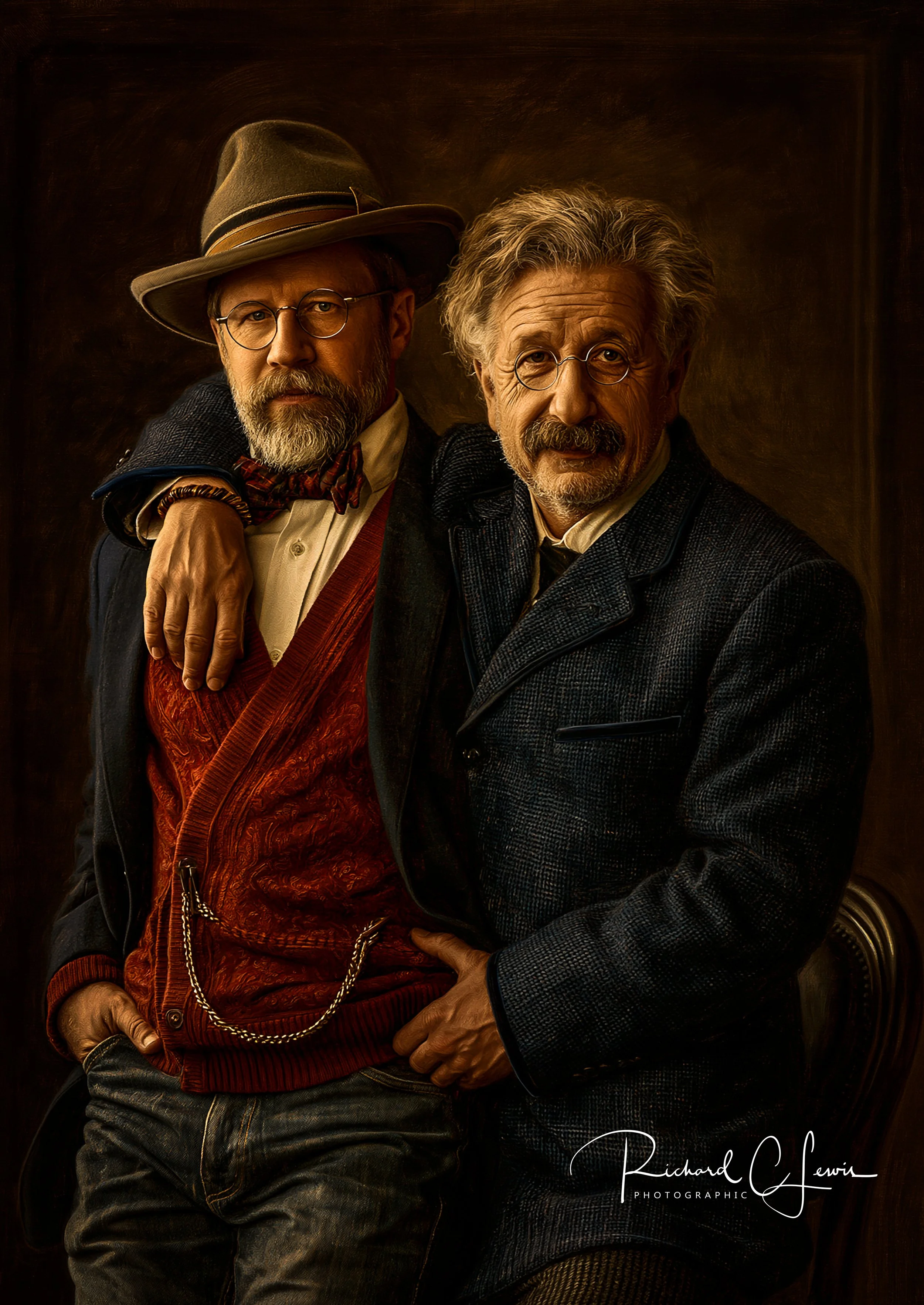
“You keep better company than you know”
There were two of us then, and the country was not yet finished.
Montana still lay open and raw beneath the big sky, with men walking it in wool coats and cracked boots, carrying chains and brass instruments and notebooks that smelled of rain. They measured rivers as though rivers could be owned. They marked ridges as though mountains cared for lines. They hammered stakes into ground that had already belonged to wind, elk, snow, and the old people for longer than any government could remember.
Albert did not like the stakes.
“They are useful,” he said, looking down at one driven into the cold earth near the Firehole River. “But they are also arrogant.”
He said this softly. He said most true things softly.
We had come into Yellowstone with a survey party out of the north, riding in through weather that changed its mind every hour. Snow fell in the morning and was gone by noon. The sun came hard and bright against the white backs of the mountains. By evening the sky burned red over the lodgepole pine and the earth steamed like a living animal.
Albert rode badly but without complaint. His hat was never right on his head. His hair had the look of something that had survived a storm and then decided the storm had been correct. He carried no rifle. He carried papers, a pencil, a pipe, and a violin wrapped in cloth.
“You have brought a fiddle into bear country,” I said.
“Yes,” he said. “The bears may be educated.”
That was how he spoke when he was happy.
The men in the party did not know what to make of him at first. They were strong men and hard men, and they trusted leather, steel, coffee, bacon, and silence. Albert trusted light. He trusted questions. He trusted the strange bend in a thought before it became an answer.
But after three days they began to listen.
Not because he was famous. He was not famous there. Not because he was learned. Many learned men are useless when the fire is low and the horses are nervous. They listened because he had no cruelty in him. Because he did not make a small man feel smaller. Because when he spoke to a cook, a wrangler, a half-frozen boy carrying chain through the marsh, he spoke as though the boy held some piece of the universe in his hands.
That is a rare thing in any country.
One night we camped near the terraces of Mammoth, where the white stone spilled down in frozen waves and the steam rose under the stars. The surveyors had gone quiet. The horses stood with their tails to the wind. Far off, a wolf called once and then again, and the second call seemed lonelier because the first had been answered by nothing.
Albert sat beside me with his coat buttoned high. The fire made gold in his spectacles.
“You keep better company than you know,” he said.
“I keep cold company tonight.”
He smiled. “No. I mean men. Friends. The people we choose.”
I looked at him. He was watching the fire as though something very old was moving inside it.
“A man becomes the expectation of those around him,” Albert said. “If he sits with cowards, he learns to call fear wisdom. If he sits with thieves, he learns to call hunger justice. If he sits with small souls, he begins trimming his own to fit the room.”
The fire snapped. Sparks went up and vanished.
“And if he sits with better men?” I asked.
“Then he is ashamed of his laziness,” Albert said. “And that is the beginning of civilization.”
It was a fine thing to say beside a fire in a country men were trying to measure. I wrote it down later, though not as well as he said it.
The next morning we rode south toward the geyser basins. The earth grew strange beneath us. It hissed. It trembled. Blue pools looked up from the ground like eyes of another world. There were places where the crust was thin and death waited under beauty. Albert dismounted and stood before one pool so clear and blue it seemed no color at all, but the memory of color.
“What do you see?” I asked.
“Time,” he said.
I laughed because I thought he was joking. He was not.
“No,” he said. “Not time as clocks tell it. Time as pressure. As heat. As waiting. As violence made patient.”
He crouched and held his hand above the steam.
“This place is honest,” he said. “It shows that creation is not gentle.”
There were bison moving in the flats below us, dark and heavy, their heads low against the wind. A calf followed its mother through the steam, appearing and disappearing as though walking in and out of dream.
I thought then of men and maps and laws. I thought of how we name things so we do not fear them. I thought of how poor a name is beside the thing itself.
That afternoon one of the younger chainmen slipped near a hot spring. He went down fast, one leg breaking through the crust. He screamed once, and the sound changed every man there. We pulled him out with a saddle rope, and his boot came away ruined and smoking. He bit through a glove while we wrapped the leg.
Albert held the boy’s shoulders. He did not look away. Some men look away from pain because they are tender. Some look away because they are weak. Albert was tender but not weak.
The boy kept saying he was sorry. Sorry for falling. Sorry for slowing the work. Sorry for being afraid.
Albert bent close to him.
“You owe no apology for suffering,” he said. “Only for causing it.”
The boy wept then. Not loudly. Just enough to let the poison out.
We made a litter and carried him back toward camp. The day turned iron-gray, and snow came again. It fell on the black backs of the bison and on the white terraces and on the red faces of men who had gone very quiet. Nobody complained. Nobody cursed the delay.
That evening, one by one, the men brought things to the boy. Coffee. Tobacco. A clean blanket. A letter someone had been saving from home. The cook gave him the best piece of meat and said it was burnt anyway.
Albert watched all this and said nothing.
Later he played the violin.
He played badly at first because his hands were cold. Then better. Then well enough that the whole camp became still. The tune was not one I knew. It had sorrow in it, but not defeat. It moved like water under ice. It made the mountains seem near and the dead seem nearer. It made every man there remember someone he had failed to love properly while there was still time.
That is what music can do when it is not showing off.
I saw the boy close his eyes.
I saw the cook wipe his face with his sleeve and pretend it was smoke.
I saw the old survey chief stare into the dark as if he had found a boundary no instrument could mark.
When Albert finished, no one spoke. The silence after it was part of the song.
The next day the sky cleared. We rode up where the land opened and the mountains stood hard and bright under the morning sun. Albert and I stopped on a ridge above a valley cut by water and time. The survey party moved below us in a thin line, small against the country.
“They think they are measuring Montana,” I said.
Albert smiled.
“They are measuring themselves,” he said.
We sat there a long while.
I asked him then what he believed a man was for. It was a large question, and I was embarrassed after asking it. Large questions often sound foolish in daylight.
Albert did not laugh.
“A man is here to widen the circle,” he said.
“What circle?”
“The circle of what he can love without owning.”
That stayed with me.
It stayed longer than the maps. Longer than the wages. Longer than the names of the men who rode with us. I have forgotten many things from those years. I have forgotten the exact courses of creeks and the numbers written in the survey books. I have forgotten who won at cards and who lied about his shooting and who swore he had seen gold where there was only mica shining like a cheat in the pan.
But I remember Albert on that ridge.
I remember his coat dark against the snow.
I remember how he looked at the country not as land to be possessed, but as a question large enough to make a man decent.
And I remember thinking that friendship was not comfort. It was not agreement. It was not another man telling you that you were already enough.
Friendship was a high country.
It made you climb.
It thinned the air around your excuses.
It gave you a view of the man you might become and then left you no peace until you went toward him.
Years later, when the country was more fenced and the maps were cleaner and the wild places had begun to shrink under the certainty of men, I would think of that journey. I would think of Yellowstone steaming in the cold. Of the injured boy. Of the violin. Of Albert saying civilization began with shame before better men.
He was right.
The best friends do not lower the mountain.
They hand you your coat.
They point toward the weather.
Then they start walking.
The Line That Held the Country
Some writings that might lead to something bigger, but then again maybe not.
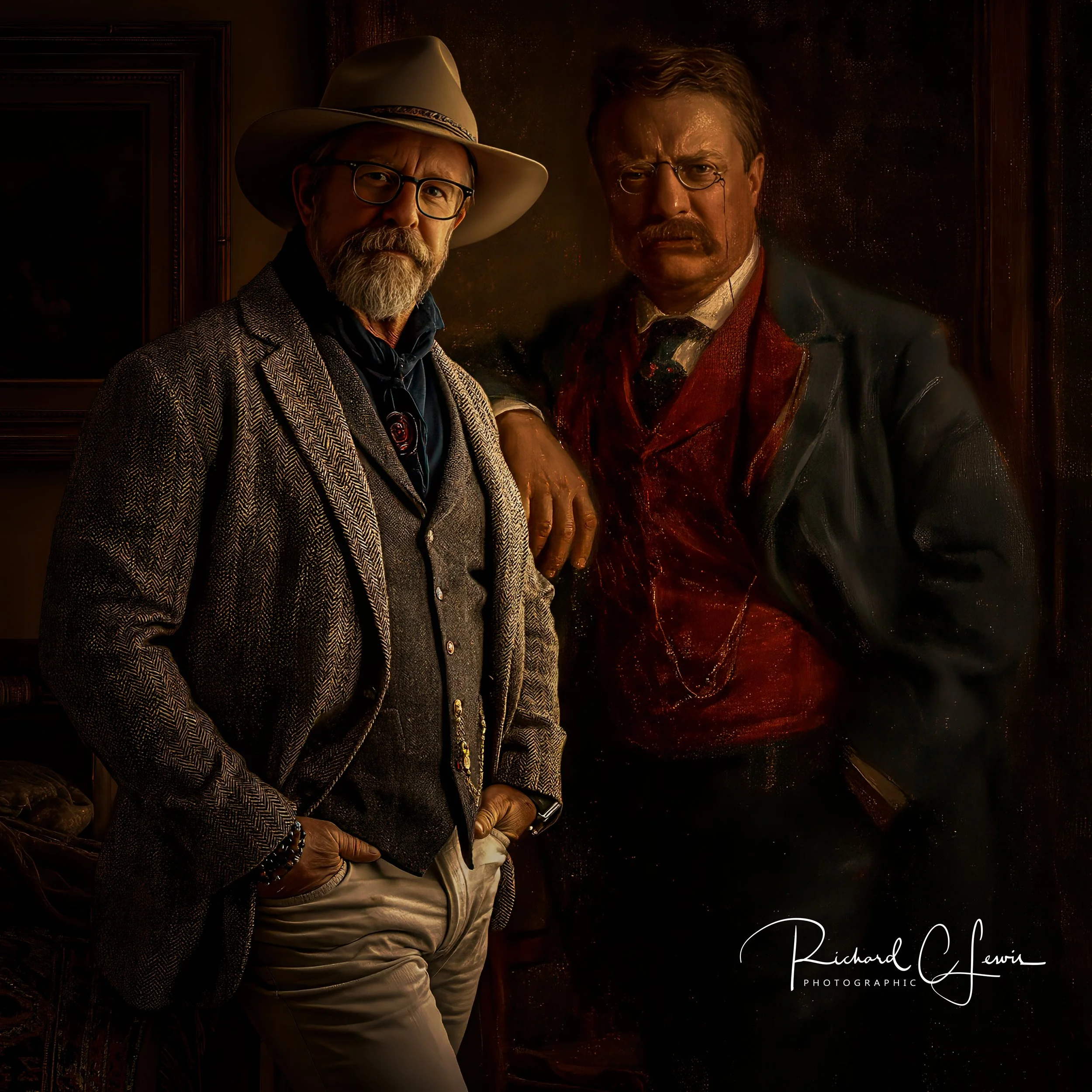
But some lines are not made of ink.
We met in Livingston in a saloon with a carved oak bar and lamps that smoked in the glass. The place was called Moran & Liss, though no man I knew had ever seen either Moran or Liss. The whiskey was honest and the coffee was not. That was enough.
Roosevelt stood by the bar with one hand around a glass and the other hand inside his coat. He was younger than the pictures would later make him, but already he had the look of a man who had decided the world would not be allowed to beat him, though it had tried very hard.
His spectacles caught the lamplight. His mustache was trimmed like a challenge.
“You are the man who knows the country,” he said.
“I know some of it.”
“That is better than most men who claim all of it.”
He smiled then, but not much. He had come west after sorrow. Everyone knew it and no one said it. His wife had died. His mother had died. Same day. A blow like that either hollows a man out or makes a new country inside him. With Roosevelt you could see both things happening.
On the table between us lay a survey map of the Yellowstone country. It was wrong in three places before breakfast and dangerous in two after dark. The mountains were drawn too clean. The rivers were too obedient. The blank places on the paper were not blank if you had ridden through them. They had bears in them, and wolves, and steam from the earth, and Indians who knew the old trails, and men with rifles who believed a boundary was only a suggestion until somebody bled for it.
Roosevelt tapped the map.
“They say this is a park.”
“It is.”
“They say the government has set it aside.”
“It has.”
“But lines on paper do not keep men honest.”
“No,” I said. “Only other men do.”
He looked at me then, hard and pleased.
“Then we shall ride.”
We left before sunrise with two packhorses, a surveyor named Pike, and a Crow scout called Red Plume, who did not waste words because he had seen what words were worth among white men. Frost lay silver on the grass and the Yellowstone River moved beside us, dark and cold and alive. The horses blew steam. The mountains stood blue against the morning.
Roosevelt rode badly at first, but he rode with appetite. That was the thing about him. He attacked discomfort as if it were an animal. The saddle hurt him, so he sat deeper. The cold cut him, so he laughed. The wind hit his face, and he bared his teeth at it.
By noon we were in open country. The sky widened until a man felt small enough to tell the truth. We saw elk moving in the timber and antelope bright on the flats. Once we stopped above a valley where the grass bent and moved as if the earth itself were breathing.
“Buffalo,” Red Plume said.
There were not many. Not like before. Not like the stories. They moved slowly, dark and heavy, with calves among them. Roosevelt took off his hat.
No one spoke for a while.
“That,” he said finally, “is America before the counting men got to it.”
Pike, the surveyor, shifted in his saddle.
“Counting men made this park, Colonel.”
“He is not a colonel,” I said.
“Not yet,” Roosevelt said.
He smiled again, and this time there was some boy in it.
We camped near a creek that night. The land smelled of sage and horse sweat and woodsmoke. Pike worked by lantern, scratching figures into his book. Red Plume sat apart and watched the dark. Roosevelt cleaned his rifle though it did not need cleaning. I made coffee strong enough to float a horseshoe.
“There are men in Washington,” Roosevelt said, “who think land is saved when ink dries.”
“There are men out here who think land is theirs when they cut a tree.”
“And what do you think?”
“I think the land was never ours. Not really.”
He looked across the fire.
“That is a lonely thought.”
“It is an honest one.”
The fire cracked. Somewhere far off a wolf called. Another answered, higher up, toward the black timber.
Roosevelt listened.
“I came here because I had to,” he said.
I said nothing.
He turned the rifle in his hands.
“There was a house in New York. There was a nursery. There were flowers on a table. I remember the flowers more clearly than I remember the words they said to me. That is a strange cruelty of the mind. It keeps the flowers.”
The fire burned low.
“I thought if I rode far enough, I might come to a place where grief could not follow.”
“Did you?”
“No.”
He looked toward the sound of the wolves.
“But out here it has to ride hard to keep up.”
That was the first true thing he said to me.
The next day the weather turned. It came out of the northwest, hard and mean, with sleet like thrown gravel. We climbed toward the high country where the map showed a clean boundary line and the country showed nothing clean at all. The horses slipped on shale. Pike cursed the government, the mountains, and his own boots. Red Plume moved as if weather were no more than another man talking too much.
Near the pass we found the first dead elk.
Then another.
Then we saw the tracks.
Two men had been there with pack animals. They had taken hides and tongues and left the bodies for birds. They had crossed into the protected ground, though no sign stood there and no fence marked it. Only the map. Only the idea. Only the promise.
Roosevelt knelt beside one of the elk. The sleet ran down his hat brim.
“This is not hunting,” he said.
“No.”
“This is theft from men not yet born.”
That stayed with me. I had never heard it put that way. Men not yet born. Children who would come west years later with clean eyes and ask where the herds had gone. Fathers who would stand with them and have no answer good enough. Pain travels forward. So does duty.
We followed the tracks down into timber.
The poachers had made camp in a draw out of the wind. There were three of them, not two, and one had a buffalo robe over his shoulders. They had rifles stacked against a log and meat hanging from poles. One was cooking. One was sleeping. The third saw us first.
He went for his rifle.
Roosevelt was off his horse before I could speak.
“Leave it,” he shouted.
The man stopped because Roosevelt’s voice had the kind of force that made obedience seem like your own idea.
“This is public land,” the man said.
“It is protected land.”
“Protected by who?”
Roosevelt stepped forward.
“By me, for the present.”
That was a foolish thing to say and a brave one. Often they are kin.
The man laughed and spat into the fire.
“You some eastern dude playing sheriff?”
Roosevelt’s face changed. It did not grow angry. It grew still.
“I am a citizen of the United States,” he said. “And I am telling you that this slaughter ends here.”
The man looked at me. Then at Red Plume. Then at Pike. Then back at Roosevelt. He was deciding how many ghosts he wished to make before supper.
Red Plume lifted his rifle slightly. Not much. Enough.
No one died that day. That was the best thing that happened.
We took their rifles until morning and marked their names. Pike wrote them down with great satisfaction, as if ink had finally found a useful purpose. Roosevelt made the men bury what they could and burn what they could not. The air stank of wet ash and wasted life.
That night Roosevelt did not sleep. I found him near the creek at dawn. Snow had fallen and softened everything. He was standing bareheaded, looking east where the first light came pale over the ridges.
“You cannot save it all,” I said.
“No,” he said. “But that is no excuse to save nothing.”
Below us the creek moved under ice. Above us the mountains stood without concern for our small griefs and smaller victories.
“My father taught me,” Roosevelt said, “that a man must spend himself on worthy things.”
“He taught you well.”
“He died before I could become the man he expected.”
“Maybe that is why you are still becoming him.”
He turned then. His eyes were wet, though the cold gave him cover.
There are moments between men when nothing should be said. If you speak, you cheapen it. So we stood there with the snow falling on our hats and shoulders, and the horses stamping in the trees, and the whole Yellowstone country lying quiet as if it had decided to listen.
Later that morning we rode to the ridge Pike needed for his sighting. The clouds opened. Sun struck the valley below, and steam rose from the distant thermal basins like breath from some sleeping animal older than scripture. The river shone in pieces. Elk moved along the timber edge. Far off, the remaining buffalo crossed a meadow, slow and dark and stubborn.
Pike set his instrument and cursed less than usual. Red Plume watched the horizon. Roosevelt stood beside me.
“There,” he said. “That is what they must understand.”
“Who?”
“All of them. Congress. Ranchers. Soldiers. Boys not yet born. Men who think money is memory.”
He took the map from his coat and held it against the wind.
“A park is not land removed from use,” he said. “It is land given a higher use.”
The wind snapped the paper in his hands.
I looked at the valley and thought of all the men who had tried to own what could only outlive them. I thought of the dead elk. I thought of Roosevelt’s flowers in New York, still blooming in the cruel room of his mind. I thought of how a man sometimes saves a place because he could not save a person.
That was when I understood him.
He was not running from grief. He was giving it work.
We rode back to Livingston three days later. The saloon was warm and loud and full of men improving their stories. Moran & Liss still had no Moran and no Liss. The whiskey remained honest. Roosevelt drank one glass and pushed it away.
“You will ride with me again,” he said.
It was not a question.
“When?”
“When there is something worth fighting for.”
“That is most days out here.”
“Bully,” he said.
I laughed then, and so did he.
Years later, people would speak of him as if he had been born bronze. They would put him on mountains and in books and make him larger than hunger, larger than sorrow, larger than any man ought to be. But I knew him when his grief was still fresh and his hands were cold around a tin cup of coffee. I knew him when the West had not yet cured him but had taught him how to stand.
And I knew this too.
The line Pike drew on that map was thin. Any fool could cross it. Many did.
But some lines are not made of ink.
Some are made of men who stand in the weather and say no.
Some are made of what we owe the dead.
Some are made of what we owe the children.
And some, if they hold long enough, become a country.
The Tall Man of the North Fork
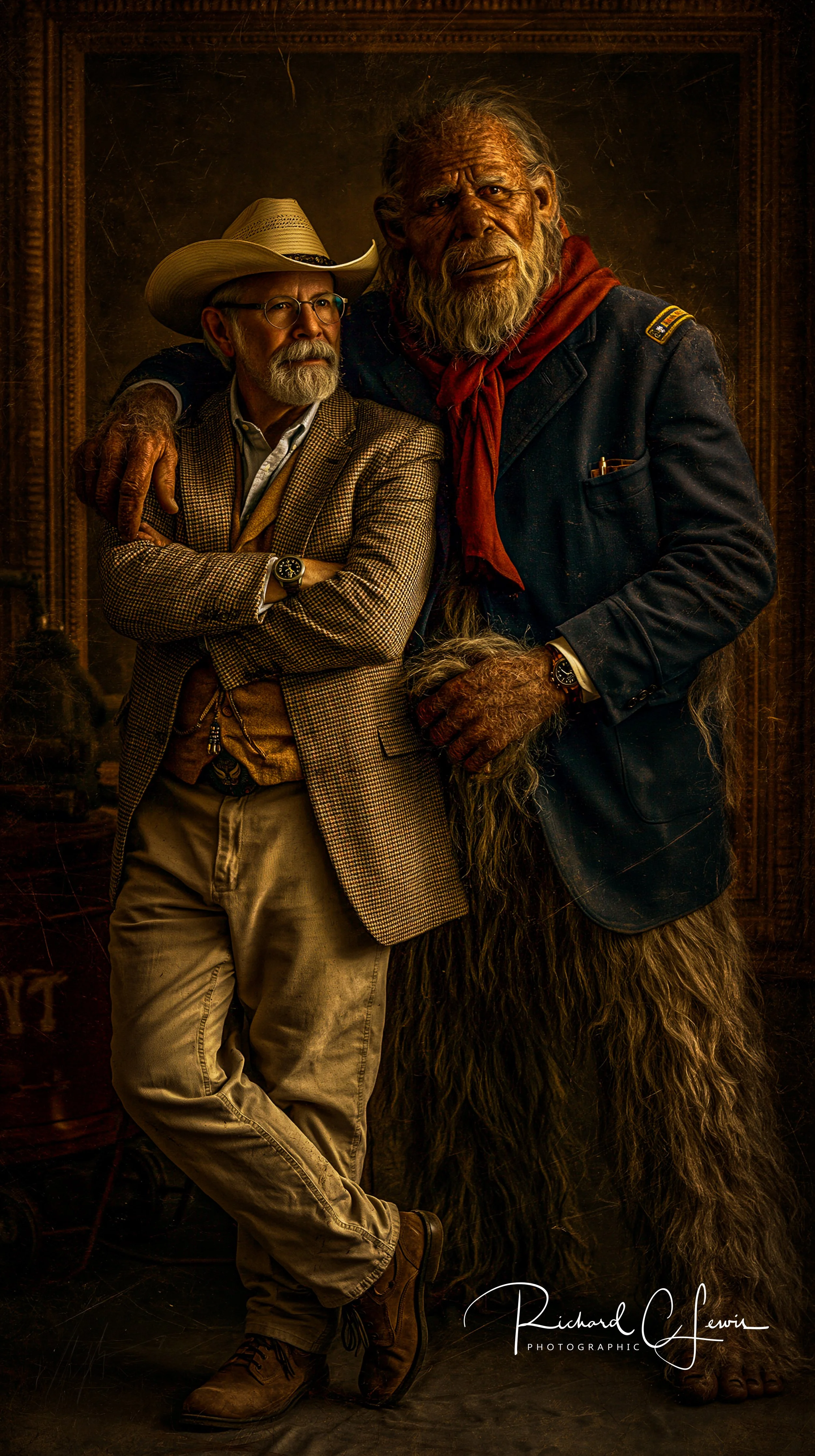
The land remembers who loved it.
In those days the maps were still mostly lies.
They were clean lies, drawn in good ink by men who had never slept wet or gone hungry under a sky full of hard stars. They showed rivers as blue threads and mountains as little teeth. They did not show the cold. They did not show the mosquitoes. They did not show the way a horse could die standing in a bog or the way a man could lose his courage before breakfast and still have to go on.
We were sent north to measure the country.
That is what they called it. Measuring.
We carried chains and rods and notebooks wrapped in oilskin. We carried rifles and flour and coffee and salt pork gone slick in the heat. We carried letters from Washington and orders from men who wore clean collars. The land did not care for the letters. The mountains did not care for Washington.
The place had names already, though not ours. The Blackfeet knew the passes. The Kootenai knew the valleys. The Salish knew the trails where the deer crossed and where winter killed the foolish. But the government wanted lines. Lines across rivers. Lines through timber. Lines over places no line could own.
I was younger then. My beard had more brown in it and my knees did not speak to me each morning. I believed maps mattered.
Then I met him.
It was on the North Fork, in the timber where the river ran cold and fast over stones green with age. I had gone ahead of the party to find a sightline. The trees were thick and the clouds had come down low, and the mountains were hidden like old sins. I heard something moving above me on the slope. Not a bear. A bear is loud because he has never had to be quiet.
This was quiet.
I raised the rifle.
He stepped from the cedar shade and looked at me as if he had been expecting me for years.
He was taller than any man I had seen. His shoulders were broad as a cabin door. His hair was gray and brown and hung long over him like winter grass. His face was not the face of a beast. That was the first thing I knew. It was old and grave and full of trouble. His eyes were amber in the dim light, and there was a sadness in them that made me lower the gun before I knew I had done it.
He looked at the rifle. Then at me.
“You lost?” I asked.
He made no answer.
The river talked for both of us.
I took tobacco from my pouch and set it on a flat stone between us. My hand shook some, though I would not have admitted it then. He watched the tobacco. Then he reached into the hair at his chest and brought out a small smooth stone, white as bone, worn by water. He placed it beside the tobacco.
That was our treaty.
Not Washington’s. Ours.
We called him Amos after that, though I do not know if he liked the name. He had a name of his own. I heard it once from an old Blackfeet woman who saw him at a distance and crossed herself in a way that was not Christian. She said something soft and ancient. It meant, as near as I could learn, He Who Walks Before Snow.
Amos was easier for white men. White men are fond of making easy names for things they do not understand.
He stayed near us through that summer.
Not always in sight. Never in camp unless the fire was low and the men were asleep. But he was there. We would wake and find a haunch of deer hung from a branch. We would find berries piled in a tin cup. Once, after three days of rain, when the matches were wet and the men had gone mean with cold, he came out of the dark carrying coals cupped in a piece of bark like he was carrying a child.
No man laughed at him after that.
We crossed country that would later be called Glacier, though no one owned that name yet. The mountains rose clean and terrible above us. Snow lay in the high cuts even in August. The lakes were blue in a way no ink could hold. There were goats on cliffs where no living thing should stand, and eagles that looked down on us as if we were temporary.
Amos knew every pass.
He knew where the wind would turn before it turned. He knew when the horses would spook and when the ice would break. He knew which berries were good and which would make a man pray for death and mean it. He knew the old trails. He never walked on them unless he had to. He walked beside them, among the trees, as if he did not wish to wear them down.
One evening we camped below a wall of red stone. The sun was dying behind the peaks, and the whole west burned like a forge. I sat with my notebook on my knee and tried to draw the valley. Amos sat near the fire, his great hands folded. He had taken to wearing an old cavalry coat one of the men had traded him for a silver watch that did not run. The coat was too small across his shoulders, but he wore it with dignity.
“You understand what we are doing?” I asked him.
He looked at me.
“We are marking it,” I said. “The rivers. The ridges. The boundaries.”
He looked toward the mountains.
I laughed then, but there was no mirth in it.
“Yes,” I said. “It is a fool’s work.”
He reached for a stick and drew a line in the dirt. Then he wiped it away with the flat of his hand.
That was all.
It was the finest argument I ever heard.
There was a man with us named Bell. He was from Ohio and had come west to become something larger than he was. That is a dangerous reason to come west. The country will make you smaller first, and if you survive that, it may make you honest.
Bell feared Amos. Men often hate what they fear, and Bell was no exception. He said the creature should be reported. He said a specimen would bring money. He said museums in the East would pay. He said science required proof.
“Science requires humility,” I told him.
He spat into the fire.
“Then you have chosen the wrong profession,” he said.
He was right about that, maybe.
The trouble came near Marias Pass.
Snow fell early. It came in the night, heavy and wet, and by morning the world had been remade without asking us. The horses were half mad. One mule broke a leg in the rocks and had to be shot. The sound went flat against the snow and did not echo.
We pushed on because Bell insisted the pass was near and because I was too proud to turn back.
Pride is a compass that points mostly toward graves.
By afternoon the storm closed hard. We lost the line of trees. We lost the trail. We lost one another in thirty yards of white. A young chainman named Ellis slipped on a shelf of ice and went over a cutbank into timber below. We heard him cry once. Then nothing.
Amos moved before any of us could speak.
He went down the bank like falling rock. We could not see him. We heard branches break. We heard the storm. We waited with ropes around our waists and snow filling our collars.
After a long time he came back carrying Ellis against his chest. The boy’s leg was broken and his face was gray. Amos climbed with one hand and held the boy with the other. No man had strength like that. No man had gentleness like that either.
Ellis lived because of him.
Bell saw it. We all saw it.
That night we made camp in the lee of a broken cliff. Amos sat outside the firelight. Snow gathered on his shoulders and did not melt. Bell came to him with a tin cup of coffee. His hand shook.
“I was wrong,” Bell said.
Amos took the cup carefully between two fingers.
Bell stood there a moment, small and cold and human.
“I am sorry,” he said.
Amos drank the coffee. He made a face at the bitterness, and for the first time I saw him smile.
It nearly broke me.
There are things too large for laughter and too tender for words. That smile was one of them.
When spring came we finished the survey. Or said we did. The notebooks were filled. The bearings were checked. The rivers had numbers. The peaks had names given by men who would not climb them. We packed the instruments and started south.
Amos followed us for three days.
On the fourth morning he did not come.
I found his tracks near the river. Large tracks. Deep in the mud. They led north toward the dark timber and the snowfields beyond. Beside them were the prints of deer and wolf and bear. Above them the peaks stood clean against the morning.
I wanted to follow.
I did not.
A man spends much of his life not following what he loves.
Years passed. The country filled with fences, roads, survey stakes, claims, uniforms, tourists, postcards, and names. Men came to see the mountains and said they had discovered beauty. Beauty had been there all along, waiting with more patience than we deserved.
I grew old.
My hands became poor at fine work. My eyes watered in the wind. I kept the white stone Amos had given me in a small leather pouch. When the pain was bad or the world became too loud with engines and argument, I held it in my palm and remembered the North Fork. I remembered wet cedar. I remembered coffee smoke. I remembered a great gray hand wiping a line from the dirt.
Near the end of my surveying years I went back alone.
I was too old for the trip and knew it, which is sometimes the only proper reason to go. I rode north with one horse and little gear. The mountains were still there. They had not missed me. The river was still cold. The wind still came down from the high places with teeth in it.
At dusk I made camp where we had first met.
I set tobacco on the same kind of flat stone. My hands were stiff and I spilled some. Then I placed the white stone beside it.
“I came to give it back,” I said.
The timber was quiet.
“I have carried it long enough.”
Nothing moved.
The light faded. The river ran black. I felt foolish, but grief makes fools of better men than me.
Then from across the water came a sound.
Not a call. Not a roar.
A low breath. A knowing.
He stepped from the trees.
Older. Much older. His hair was pale now, nearly silver. One shoulder hung lower than the other. But his eyes were the same. Amber and tired and kind.
I stood, but my knees failed me some. He crossed the river without hurry, water breaking around him. When he reached me, he looked at the stone, then at my face.
“I kept it safe,” I said.
He picked up the stone and held it. Then he pressed it back into my hand.
I understood.
Some gifts are not meant to be returned.
We sat by the fire as the stars came on. I told him about the men who had died and the men who had prospered and the land that had been measured and sold and praised and wounded. I told him I was sorry, though sorry is a poor tool and fixes almost nothing.
He listened.
Before dawn he rose. He placed one great hand on my shoulder. It was heavy and warm. For a moment I was young again, and the map was blank, and the world had not yet been divided.
Then he turned north.
At the edge of the trees he stopped once and looked back.
I wanted to call out. I wanted to ask him not to go. I wanted to ask if he had forgiven us.
But the old ones do not owe answers to the young. And we were all young beside him.
So I raised my hand.
He raised his.
Then He Who Walks Before Snow went into the timber, and the timber took him as a mother takes back a child.
I never saw him again.
But sometimes, when the first snow comes to Montana and the mountains disappear behind their own weather, I think of him walking ahead of the storm. I think of his great feet making the first marks in the white country. I think of all the lines we drew and all the lines the snow erased.
And I know this.
The land remembers who loved it.
Even when men do not.
I Am Back!
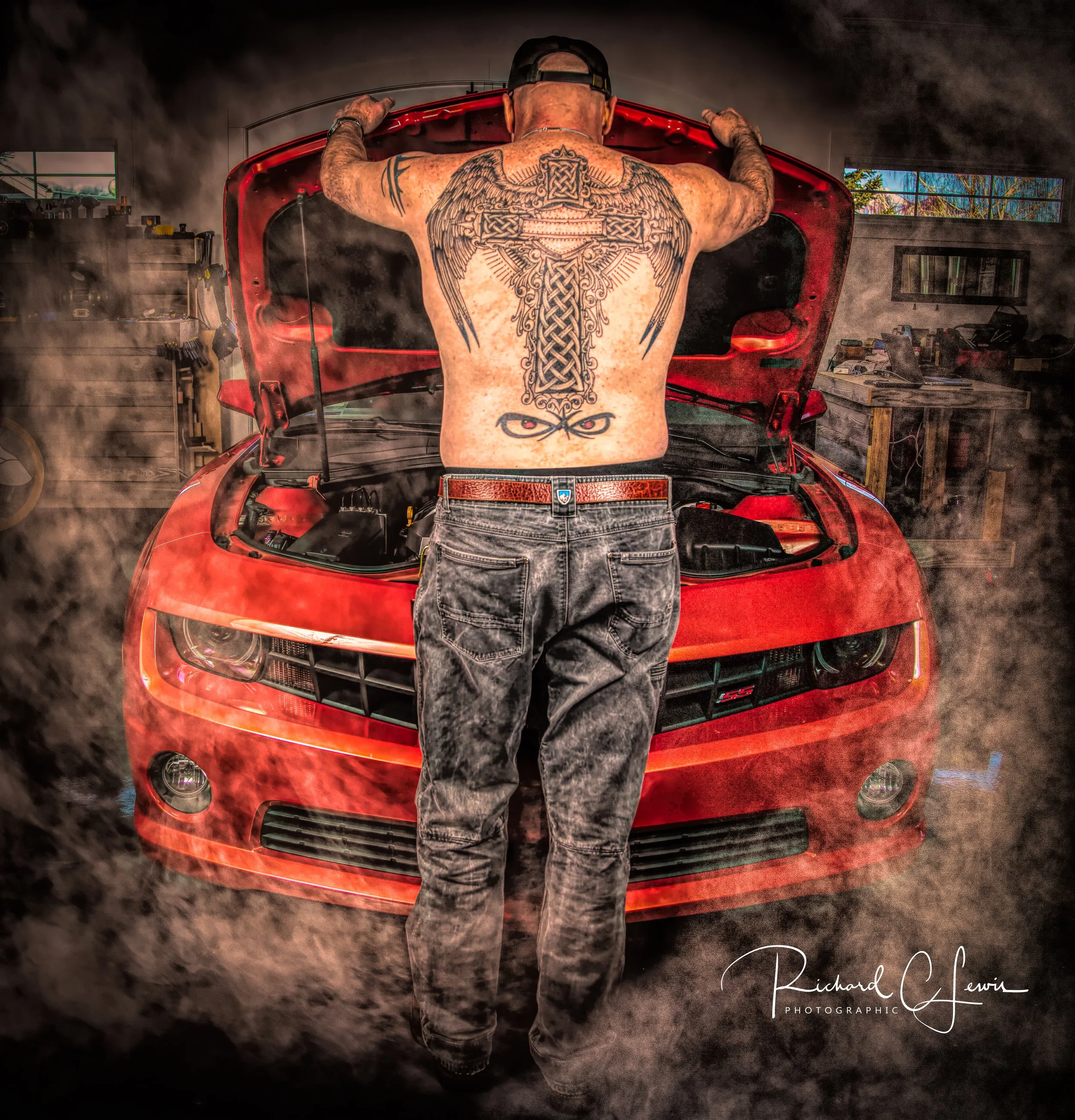
We are fragile creatures, really. We walk this earth with such absolute certainty, forgetting that it takes only a fraction of a second—a misstep, a sudden, violent surrender to gravity—to shatter the illusion of our invincibility.
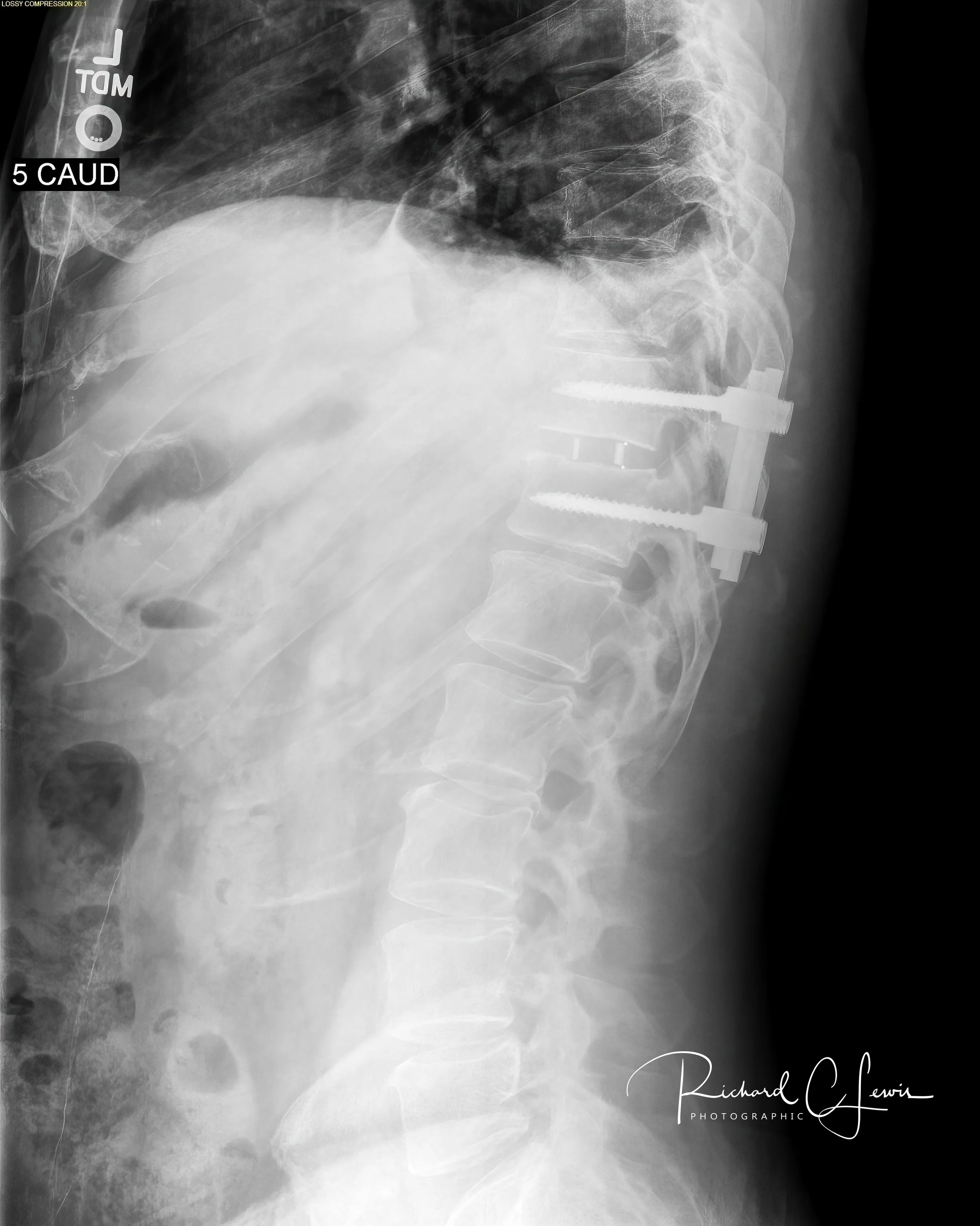
In the autumn of 2022, the earth rose up to meet me. I fell, and my back was broken. What followed was a descent into a very particular kind of madness. For months, I was adrift in a sea of sterile clinic waiting rooms, presenting my agony to a succession of doctors who looked at the shadows on my MRI scans and saw... nothing of consequence. It was a profound and isolating silence. But pain, you see, is a demanding companion. It refuses to be ignored. Finally, a pain management doctor looked closer, peering into the very same images others had dismissed. He saw the violent truth: a damaged disk had acted like a cruel hammer, bouncing off my spinal cord and leaving behind a deep, devastating bruise. Bones can fracture, but the spinal cord—that sacred, delicate conduit of human sensation—remembers. The trauma to the cord was a radiating, electric fire. It was, without question, the most agonizing burden I have ever had to endure.
The Brutal Truth
The surgeons were architects of steel and bone, but while they rebuilt the structure, the house was still burning.
To stabilize the ruins, I underwent a spinal fusion and disk replacement. Brutal. That is the only word for it. The surgeons were architects of steel and bone, but while they rebuilt the structure, the house was still burning. I was plunged into the dark years of chronic pain. My nerves remained trapped in a state of hyper-excitability, and the soft tissues were suffocated by dense, non-compliant scar tissue.
Traditional medicine offered only palliative masks—medications that dulled the mind and altered pain perception, but did absolutely nothing to repair the underlying, ruined tissues. I was surviving, but I was certainly not living.
But the human body harbors secrets, a quiet, cellular intelligence just waiting for the right instruction. My renaissance began when I turned away from the masks and discovered the profound science of peptide therapy.
It was not magic; it was biological orchestration. I began a targeted protocol to awaken my body’s dormant healing mechanisms. I introduced BPC-157, a protective compound that has been demonstrated to accelerate the healing of wounds, tendons, and ligaments, while exhibiting profound soothing effects on localized pain. Alongside it, I used TB-500, a mimetic of a naturally occurring hormone that plays a vital role in the repair, protection, regeneration, and remodeling of damaged tissues.
To rebuild the foundation, I utilized Tesamorelin and Ipamorelin, elegant secretagogues that whispered directly to my pituitary gland. Rather than forcing exogenous, synthetic hormones into my system, these peptides stimulated my body to release its own natural, pulsatile waves of human growth hormone. This promoted muscle growth, accelerated my recovery, and restored a youthful vitality that I thought was lost forever in that fall.
Slowly, the electric fire in my spine began to cool. The hardware in my back integrated with living, resilient tissue. The fog of chronic suffering lifted, replaced by the clarity of genuine, cellular repair.
Today, I am back on the track to a healthy, vibrant life. The journey was brutal, yes. But it taught me that even when we are broken, we are never truly beyond repair. We simply must find the right key to unlock the body's magnificent, quiet resilience.
The one thing that has always been a passion...
One element of my life that has always been an effortless passion has been music. This week I had the opportunity to tour PS Audio’s manufacturing facility in Boulder, CO in between meetings. It reminded me a lot of Control Laser’s facilities when I worked there. Many stages of building components, chassis, putting the pieces together and then testing them. The best part is obviously testing the product and listening to the music. There are two sides to the passion of music, not only the putting together a respectable playback system, but also finding the music that demonstrates that system well and moves your spirit. For me, it’s been long haul of putting together the playback system “at the right price” and it’s taken just as long to put together a compelling playlist of music that demonstrates a respectable audio system. Interestingly, back when I was in college, my room mate and I had a PS Audio Model One amp and pre-amp which kind of started this whole passion. We had the greatest time together and still do.
The System:
I’ve been able to put together a system made up of components I’ve collected very patiently over the past 20 years. Components I have heard over time which have made an impression on me. Some of the most notable are a Pre-amp (BC-800) and Amplifier (BA-803 x 2) setup from Bedini Audio. Unfortunately, John Bedini and his brother Gary passed away a couple years ago, just days apart. John was an innovator in electrical design and is well known in scientific circles for working on free energy devices. He also produced some of the most incredible high-end audio equipment that I have been lucky enough to acquire VERY cost effectively.
For speakers, I have been able to acquire a pair of Shahinian Acoustics Diapason speakers, designed by Richard Shahinian who was an engineer for Harman Kardon for many years.. This is a component pair of speakers comprised of Diapason Satellites sitting atop a pair of Double Eagle subwoofers. The amplifier setup combined with these speakers were interestingly the favorite setup for John Bedini as well as Richard Shahinian, so the two manufacturers mutually agreed upon their quality combination and so do I. Sure, I’ve heard a lot of fantastic setups, but this is one of those things I’ve been working towards for so many years. Part of my underlying strategy is being able to find these collector quality items at unreasonably low prices. That takes patience, persistence and knowing what you are looking for.
The Music:
I’ve always had a “different” taste in music growing up and always appreciated jazz and music from when I was very young. Some of that music being recreated in more modern tones is simply magical. Some of my all time favorites are “Say a Little Prayer” and “Walk on By” by Dionne Warwick as well as many Otis Redding and others . But what I find most striking recently is finding those magical recordings of fine music that was recorded with attention to detail leading to goosebumps when played back on a quality system. I’ve been able to put together a playlist that I use when people want to understand “what is that stereo you have in your shop”?
If you are interested in hearing some of what I’m talking about, take a listen to the playlist found here:
https://itunes.apple.com/us/playlist/audiodemo/pl.u-Dd94etrq8R9
This is obviously an Apple iTunes playlist, which doesn’t necessarily have all the quality of lossless format recordings, but it is convenient to share from iTunes. Recently, I’ve been able to compare Apple Music to other music services and found Tidal “Hi-Fi” version to be really incredible. There isn’t an album or music track I have not been able to find there. Even some really old stuff. The Hi-Fi version of Tidal is streamed in lossless up to 24-bit FLAC format which is as good as you can get. Played on a high resolving system will give you that “goosebumps” effect. As close to hearing it live as you can get!
The Reason:
My plan is to work on my photography, woodworking and audiophilic tendancies in the workshop during my retirement years, doing what I love to do. Because when you do what you love doing, you don’t work a day in your life!
When you do what you love, it doesn't feel like work.
Over the years of my career I've had some great opportunities to work in motivating and inspiring roles. Early in my career I received a degree in Photography and then went back to school for Computer Science and Business administration. It's been interesting to see the worlds of Photography and Computer Science converge as photography moved away from film and into the digital world. Now, you can carry an entire photographic workflow on the phone in your pocket, which makes everyone a photographer as they move about in their personal lives. The difference between a true photographer and a citizen photographer is the focus on the outcome of the action of taking photographs. The most impressive and compelling images are those that strike an emotional chord within the viewer. An image that was designed to do so. For me, it also has to be an image I could look at for hours and develop additional thoughts and emotions around the image. Printing and framing an image allows the audience to not only decorate their home or office, but also be inspired by the image in whatever moves them about the image. Art can bring about spiritual, emotional and social change. The notion that artwork is for mere decoration in the home or workplace underestimates the true impact to provide inspiration, motivation, creativity and emotional ties to experiences that have come and gone. The time has come where I want to focus on providing the world inspiration and motivation that have emotional ties. This is why we are creating Good Medicine Galleries. In future months we will be setting up shop to bring images to the world that have meaning. Come back and visit regularly and like our Facebook page to see what's going on in the world around us. I look forward to your interaction and hope to being inspirational artwork you would like to share with your friends and family. When I work on photography, it's a passion that does not feel like work.
