The Men Who Lifted the Sky
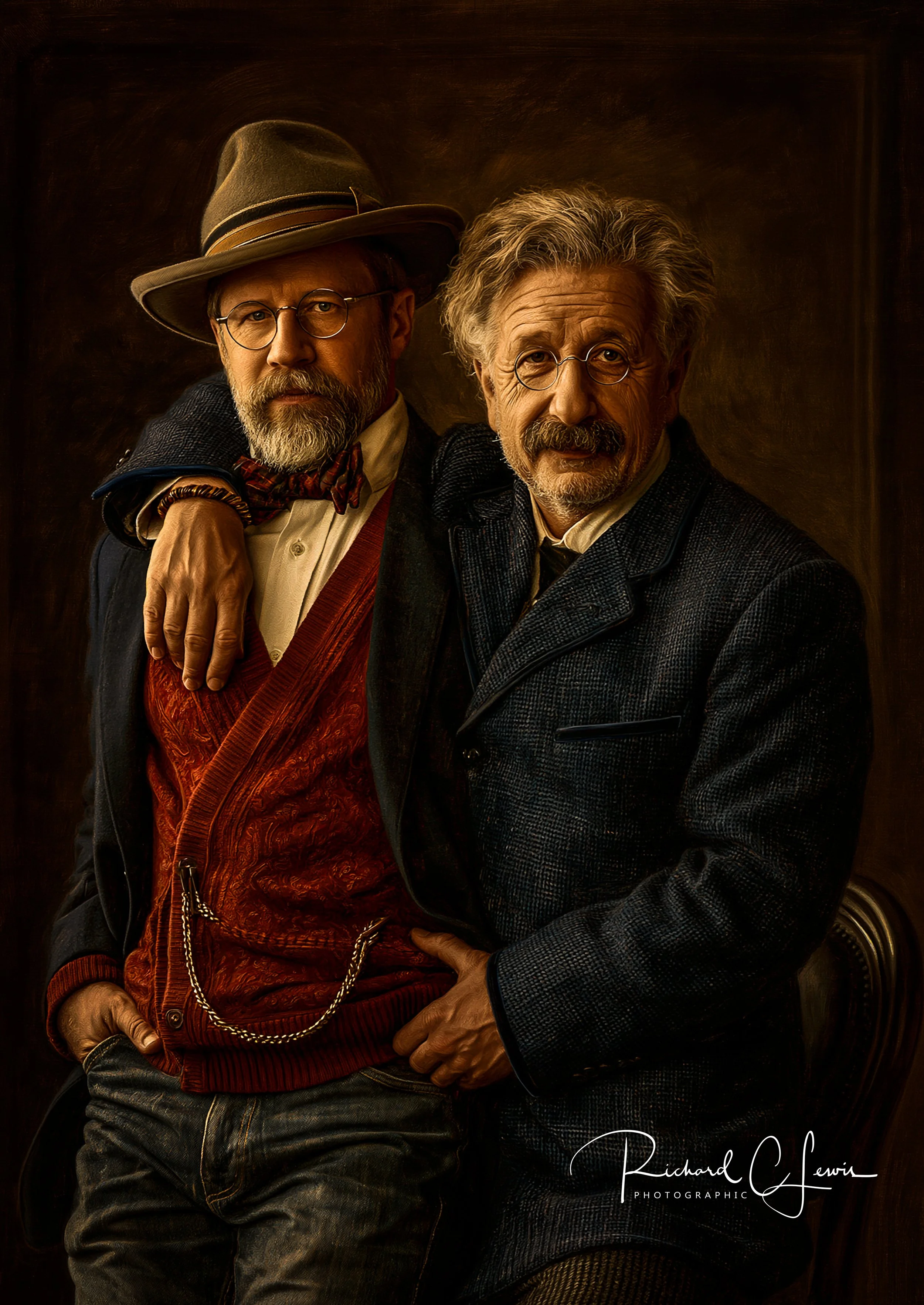
“You keep better company than you know”
There were two of us then, and the country was not yet finished.
Montana still lay open and raw beneath the big sky, with men walking it in wool coats and cracked boots, carrying chains and brass instruments and notebooks that smelled of rain. They measured rivers as though rivers could be owned. They marked ridges as though mountains cared for lines. They hammered stakes into ground that had already belonged to wind, elk, snow, and the old people for longer than any government could remember.
Albert did not like the stakes.
“They are useful,” he said, looking down at one driven into the cold earth near the Firehole River. “But they are also arrogant.”
He said this softly. He said most true things softly.
We had come into Yellowstone with a survey party out of the north, riding in through weather that changed its mind every hour. Snow fell in the morning and was gone by noon. The sun came hard and bright against the white backs of the mountains. By evening the sky burned red over the lodgepole pine and the earth steamed like a living animal.
Albert rode badly but without complaint. His hat was never right on his head. His hair had the look of something that had survived a storm and then decided the storm had been correct. He carried no rifle. He carried papers, a pencil, a pipe, and a violin wrapped in cloth.
“You have brought a fiddle into bear country,” I said.
“Yes,” he said. “The bears may be educated.”
That was how he spoke when he was happy.
The men in the party did not know what to make of him at first. They were strong men and hard men, and they trusted leather, steel, coffee, bacon, and silence. Albert trusted light. He trusted questions. He trusted the strange bend in a thought before it became an answer.
But after three days they began to listen.
Not because he was famous. He was not famous there. Not because he was learned. Many learned men are useless when the fire is low and the horses are nervous. They listened because he had no cruelty in him. Because he did not make a small man feel smaller. Because when he spoke to a cook, a wrangler, a half-frozen boy carrying chain through the marsh, he spoke as though the boy held some piece of the universe in his hands.
That is a rare thing in any country.
One night we camped near the terraces of Mammoth, where the white stone spilled down in frozen waves and the steam rose under the stars. The surveyors had gone quiet. The horses stood with their tails to the wind. Far off, a wolf called once and then again, and the second call seemed lonelier because the first had been answered by nothing.
Albert sat beside me with his coat buttoned high. The fire made gold in his spectacles.
“You keep better company than you know,” he said.
“I keep cold company tonight.”
He smiled. “No. I mean men. Friends. The people we choose.”
I looked at him. He was watching the fire as though something very old was moving inside it.
“A man becomes the expectation of those around him,” Albert said. “If he sits with cowards, he learns to call fear wisdom. If he sits with thieves, he learns to call hunger justice. If he sits with small souls, he begins trimming his own to fit the room.”
The fire snapped. Sparks went up and vanished.
“And if he sits with better men?” I asked.
“Then he is ashamed of his laziness,” Albert said. “And that is the beginning of civilization.”
It was a fine thing to say beside a fire in a country men were trying to measure. I wrote it down later, though not as well as he said it.
The next morning we rode south toward the geyser basins. The earth grew strange beneath us. It hissed. It trembled. Blue pools looked up from the ground like eyes of another world. There were places where the crust was thin and death waited under beauty. Albert dismounted and stood before one pool so clear and blue it seemed no color at all, but the memory of color.
“What do you see?” I asked.
“Time,” he said.
I laughed because I thought he was joking. He was not.
“No,” he said. “Not time as clocks tell it. Time as pressure. As heat. As waiting. As violence made patient.”
He crouched and held his hand above the steam.
“This place is honest,” he said. “It shows that creation is not gentle.”
There were bison moving in the flats below us, dark and heavy, their heads low against the wind. A calf followed its mother through the steam, appearing and disappearing as though walking in and out of dream.
I thought then of men and maps and laws. I thought of how we name things so we do not fear them. I thought of how poor a name is beside the thing itself.
That afternoon one of the younger chainmen slipped near a hot spring. He went down fast, one leg breaking through the crust. He screamed once, and the sound changed every man there. We pulled him out with a saddle rope, and his boot came away ruined and smoking. He bit through a glove while we wrapped the leg.
Albert held the boy’s shoulders. He did not look away. Some men look away from pain because they are tender. Some look away because they are weak. Albert was tender but not weak.
The boy kept saying he was sorry. Sorry for falling. Sorry for slowing the work. Sorry for being afraid.
Albert bent close to him.
“You owe no apology for suffering,” he said. “Only for causing it.”
The boy wept then. Not loudly. Just enough to let the poison out.
We made a litter and carried him back toward camp. The day turned iron-gray, and snow came again. It fell on the black backs of the bison and on the white terraces and on the red faces of men who had gone very quiet. Nobody complained. Nobody cursed the delay.
That evening, one by one, the men brought things to the boy. Coffee. Tobacco. A clean blanket. A letter someone had been saving from home. The cook gave him the best piece of meat and said it was burnt anyway.
Albert watched all this and said nothing.
Later he played the violin.
He played badly at first because his hands were cold. Then better. Then well enough that the whole camp became still. The tune was not one I knew. It had sorrow in it, but not defeat. It moved like water under ice. It made the mountains seem near and the dead seem nearer. It made every man there remember someone he had failed to love properly while there was still time.
That is what music can do when it is not showing off.
I saw the boy close his eyes.
I saw the cook wipe his face with his sleeve and pretend it was smoke.
I saw the old survey chief stare into the dark as if he had found a boundary no instrument could mark.
When Albert finished, no one spoke. The silence after it was part of the song.
The next day the sky cleared. We rode up where the land opened and the mountains stood hard and bright under the morning sun. Albert and I stopped on a ridge above a valley cut by water and time. The survey party moved below us in a thin line, small against the country.
“They think they are measuring Montana,” I said.
Albert smiled.
“They are measuring themselves,” he said.
We sat there a long while.
I asked him then what he believed a man was for. It was a large question, and I was embarrassed after asking it. Large questions often sound foolish in daylight.
Albert did not laugh.
“A man is here to widen the circle,” he said.
“What circle?”
“The circle of what he can love without owning.”
That stayed with me.
It stayed longer than the maps. Longer than the wages. Longer than the names of the men who rode with us. I have forgotten many things from those years. I have forgotten the exact courses of creeks and the numbers written in the survey books. I have forgotten who won at cards and who lied about his shooting and who swore he had seen gold where there was only mica shining like a cheat in the pan.
But I remember Albert on that ridge.
I remember his coat dark against the snow.
I remember how he looked at the country not as land to be possessed, but as a question large enough to make a man decent.
And I remember thinking that friendship was not comfort. It was not agreement. It was not another man telling you that you were already enough.
Friendship was a high country.
It made you climb.
It thinned the air around your excuses.
It gave you a view of the man you might become and then left you no peace until you went toward him.
Years later, when the country was more fenced and the maps were cleaner and the wild places had begun to shrink under the certainty of men, I would think of that journey. I would think of Yellowstone steaming in the cold. Of the injured boy. Of the violin. Of Albert saying civilization began with shame before better men.
He was right.
The best friends do not lower the mountain.
They hand you your coat.
They point toward the weather.
Then they start walking.